
New Resource: “Accessibility in Reporting”

January 2026
About the author: Alecia Kallos is a Project Lead and Director of People and Culture at Three Hive Consulting. A Credentialed Evaluator with a public health background, she brings experience using collaborative, strengths-based, and trauma-informed approaches to design and lead mixed-methods evaluations across provincial, community, and national programs.
This article is rated as:

Creating an accessible evaluation report isn’t just about meeting technical standards—it’s about ensuring your findings can be understood, navigated, and used by the widest possible audience. Whether you’re writing for clients, community partners, or interest holders with diverse needs, accessible reporting strengthens the impact of your work.
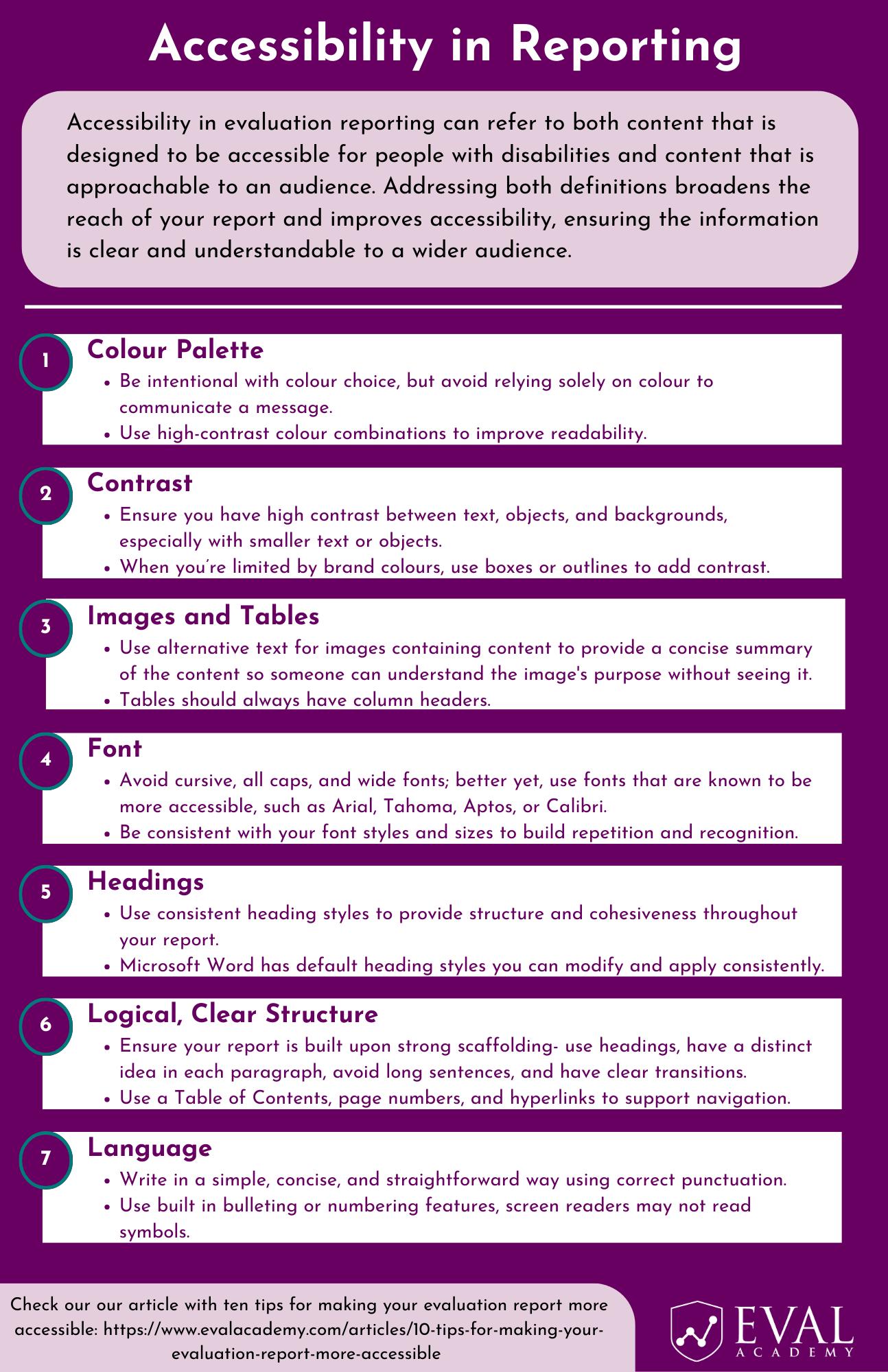
Our new infographic, Accessibility in Reporting, breaks down the essential elements of accessible reporting and offers practical, easy‑to‑apply tips to help you elevate clarity, inclusivity, and usability in every report you produce.
Who is this guide for?
This resource is designed for:
Evaluators who want to ensure their reports are readable and inclusive
Non‑profits and community organizations producing public‑facing reports
Consultants and researchers looking to improve communication and accessibility
Anyone who wants their reporting to be clearer, more engaging, and more equitable
If you’ve ever wondered whether your report is truly reaching everyone who needs it, this guide is for you.
What’s the purpose?
The goal of this guide is to help you create evaluation reports that:
Are accessible to people with disabilities
Are approachable to your audience
Use clear, intentional design
Support navigation and comprehension
Communicate findings effectively to diverse audiences
Accessible reporting isn’t an add‑on—it’s a core part of ethical, high‑quality evaluation practice.
What’s included?
This guide walks you through seven key components of accessible reporting, each with practical tips you can apply right away.
Why use this guide?
Improving accessibility in reporting helps you:
Reach a wider audience
Communicate findings more effectively
Reduce barriers for readers with disabilities
Strengthen the professionalism and usability of your work
Accessible reporting isn’t just best practice—it’s good evaluation.
See also
10 Tips for Making Your Evaluation Report More Accessible