
New Resource: 10 Evaluative Thinking Questions

February 2026
About the author: Bonnie Lakusta is a Project Lead at Three Hive Consulting and a Credentialed Evaluator with a doctorate in psychiatry. Bonnie’s background is grounded in research, project management, and change management within healthcare. She brings expertise in facilitation, quality improvement, and evaluation design, with a focus on creating usable data and clear, memorable key messages tailored to diverse audiences.
This article is rated as:

We’ve all heard evaluation described in three simple words: What? So What? Now What?
It’s a tidy way to summarize a complex process but anyone who has ever tried to interpret findings knows that the “So What?” is rarely simple.
This new resource, 10 Evaluative Thinking Questions, is designed to help evaluators, program managers, staff, and partners go deeper into the meaning behind their results. It provides a structured way to pause, reflect, and move beyond reporting numbers and moving toward understanding what the findings actually mean for programs, people, and decisions.
Why Focus on Evaluative Thinking?
Evaluative thinking helps us move from data → insight → action.
It requires curiosity, intentional questioning, and a willingness to challenge assumptions. Without it, evaluation results risk becoming static summaries instead of meaningful guidance.
This resource invites teams to engage with findings! Check out our new infographic: 10 Evaluative Thinking Questions.
Inside the Resource: 10 Questions for Better Interpretation
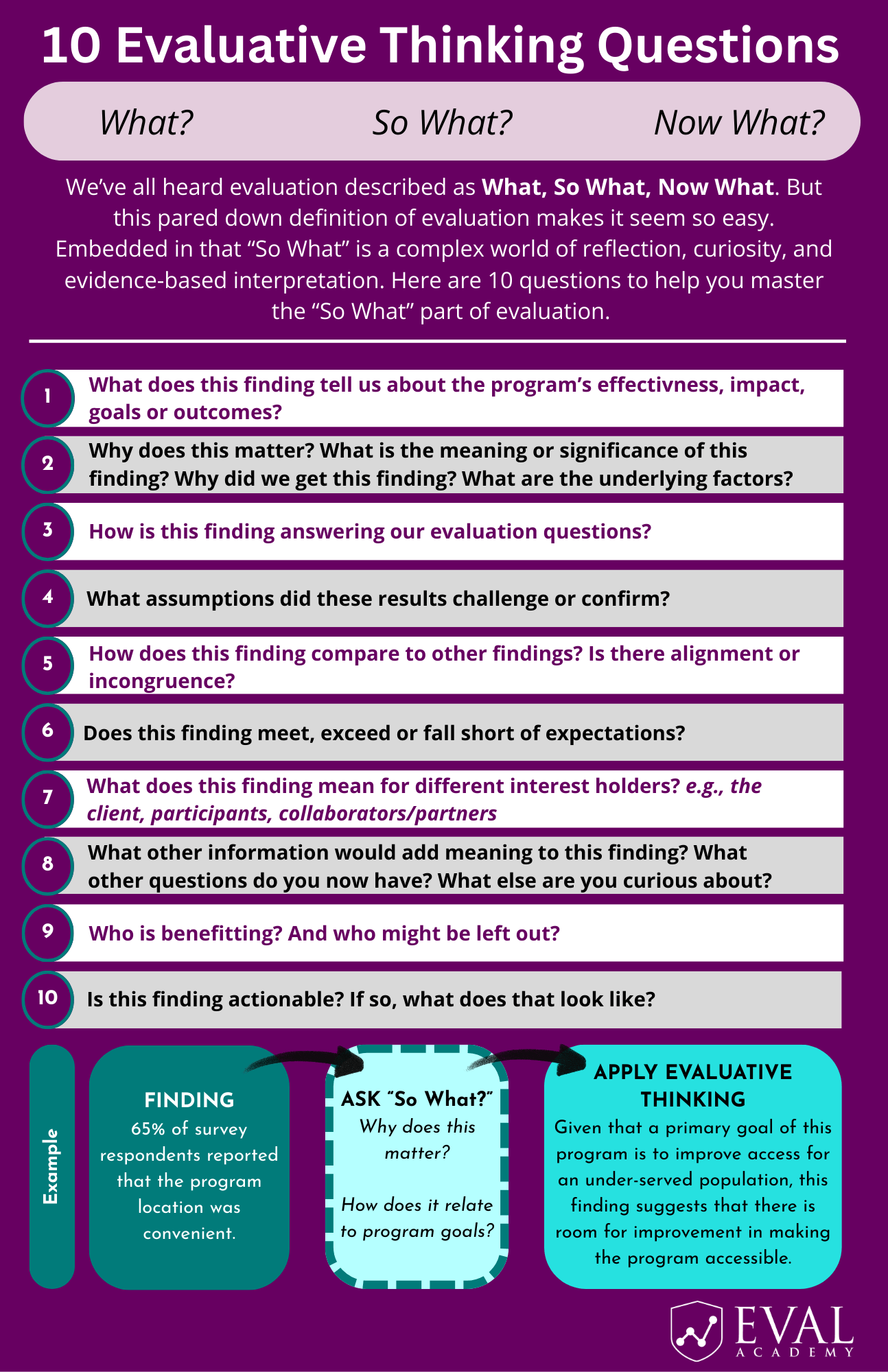
Each question is designed to prompt thoughtful discussion, richer sense‑making, and more meaningful action.
A simple finding becomes an opportunity to challenge assumptions, identify inequities, and inform decisions.
How to Use This Resource
Here are a few ways to bring these questions into your evaluation practice:
✔ In team sense-making sessions
Use the questions to structure discussion and avoid premature conclusions.
✔ When writing evaluation reports
Incorporate the questions to strengthen interpretation sections.
✔ During planning with partners
Ground conversations in evidence and shared understanding.
✔ As part of reflective practice
Encourage evaluators and program staff to pause and think critically.
Why This Matters
Good evaluation doesn’t end when data are collected. It becomes meaningful when we ask:
What does this mean?
Why does it matter?
What should we do next?
This resource, 10 Evaluative Thinking Questions, helps make those conversations intentional, structured, and impactful.
More resources on evaluative thinking
Evaluative Thinking: What Does It Mean And Why Does It Matter?