
New Resource: Pre‑Interview Risk Assessment Checklist

February 2026
About the author: Stephanie Spencer is an Evaluation Associate with Three Hive Consulting and Eval Academy Coordinator. As a Credentialed Evaluator, she brings experience in mixed-methods evaluation across health, social service, and community sectors, with a focus on qualitative methods, reflective practice, and trauma-informed approaches.
This article is rated as:

Ensuring safe, ethical, and high‑quality data collection starts before the interview ever begins. Interviews—especially those involving sensitive topics, vulnerable participants, or emotionally demanding content—carry risks that can affect participant well‑being, interviewer safety, and the integrity of the data collected.
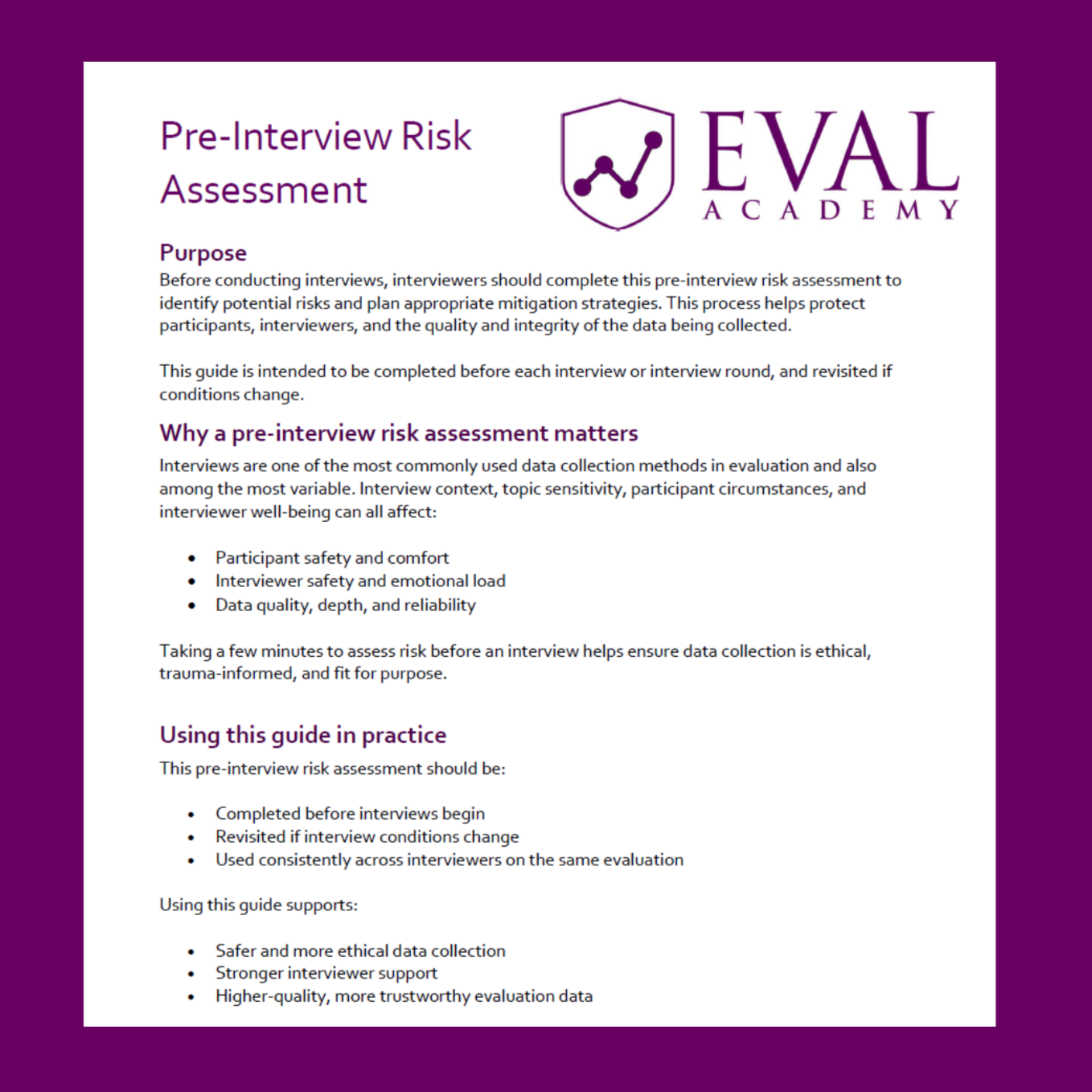
To support evaluators in preparing thoughtfully and consistently, we’re excited to introduce the Pre‑Interview Risk Assessment Checklist, it’s a practical, ready‑to‑use tool you can complete in just a few minutes before each interview or interview round.
Why Use This Checklist
This checklist guides evaluators through five core areas of pre‑interview risk consideration:
1. Interview context & topic sensitivity
Interviews involving trauma, mental health, conflict, discrimination, or other sensitive content require thoughtful planning. The checklist helps you identify where emotional distress may occur and choose appropriate trauma‑informed mitigation strategies.
2. Participant characteristics
Some participants may require additional consideration like youth, individuals in crisis, survivors of violence, or those with limited privacy or autonomy. This section guides adjustments to pacing, consent practices, support presence, and privacy assessments.
3. Interviewer safety & logistics
Whether interviews occur in‑person or virtually, evaluator safety and preparedness matter. The checklist includes prompts for location safety, exit plans, colleague check‑ins, technology testing, and ensuring private spaces.
4. Ethical & emotional risks
Both participants and interviewers can experience emotional strain. This section helps you plan for breaks, withdrawal rights, debriefs, emotional support, and managing cumulative emotional load.
5. Confidentiality & data protection
Before starting the interview, confirm that privacy risks are addressed: preventing overhearing, managing recordings safely, securing devices, removing identifiers promptly, and reinforcing informed consent.
6. Final readiness check
A final summary to confirm that risks are identified, mitigations are in place, resources are accessible, and the interviewer feels prepared—supporting safe and ethical data collection aligned with evaluation best practices.
Looking for more support? Explore our related Eval Academy resources:
Check out our Data Collection Methods course for even more detailed insight into qualitative data collection.